
Consul General Takeda’s courtesy call on the Vice-Chancellor of Durham University
2026/2/25
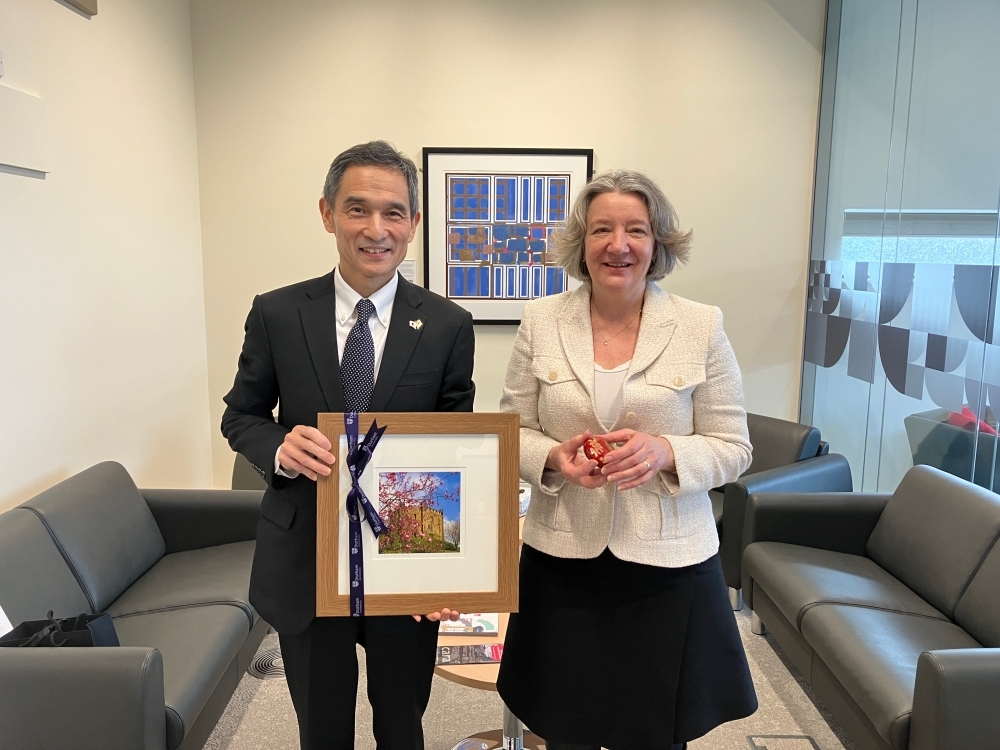
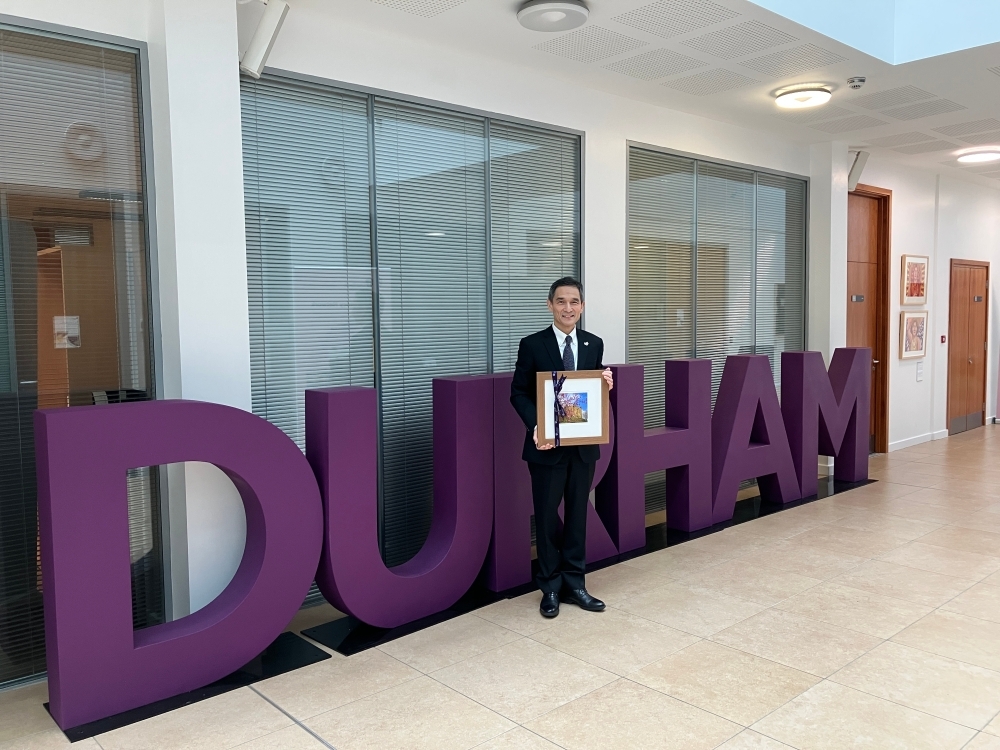
On Wednesday 25th February, Consul General Katsutoshi Takeda paid a courtesy call on Professor Karen O’Brien, the Vice-Chancellor and Warden of Durham University.
Durham University, founded in 1832, is the third oldest university in England, and once had Koizumi Yakumo (Lafcadio Hearn) among its students.
The university has maintained a long-standing and multifaceted connection with Japan through its Oriental Museum with an extensive collection, its Japanese Studies department, and the offering of programmes in Japanese studies and Japanese language education that lead to degrees.
Professor Claire O’Malley, Pro Vice-Chancellor (Global) was also present during the Consul General’s visit. She serves as the current UK co-chair of the Japan-UK university collaboration program RENKEI (the Japan-UK Research and Education Network for Knowledge Economy Initiatives), which started in 2012. Academic exchange and collaboration have been progressing not only in Japanese studies and Japanese language education but also in advanced science and technology fields such as quantum mechanics, space, molecular biology, agriculture, and hydrogen energy.
During the meeting, they exchanged views on the university’s connection with Japan and agreed to continue to work closely together.
Durham University, founded in 1832, is the third oldest university in England, and once had Koizumi Yakumo (Lafcadio Hearn) among its students.
The university has maintained a long-standing and multifaceted connection with Japan through its Oriental Museum with an extensive collection, its Japanese Studies department, and the offering of programmes in Japanese studies and Japanese language education that lead to degrees.
Professor Claire O’Malley, Pro Vice-Chancellor (Global) was also present during the Consul General’s visit. She serves as the current UK co-chair of the Japan-UK university collaboration program RENKEI (the Japan-UK Research and Education Network for Knowledge Economy Initiatives), which started in 2012. Academic exchange and collaboration have been progressing not only in Japanese studies and Japanese language education but also in advanced science and technology fields such as quantum mechanics, space, molecular biology, agriculture, and hydrogen energy.
During the meeting, they exchanged views on the university’s connection with Japan and agreed to continue to work closely together.